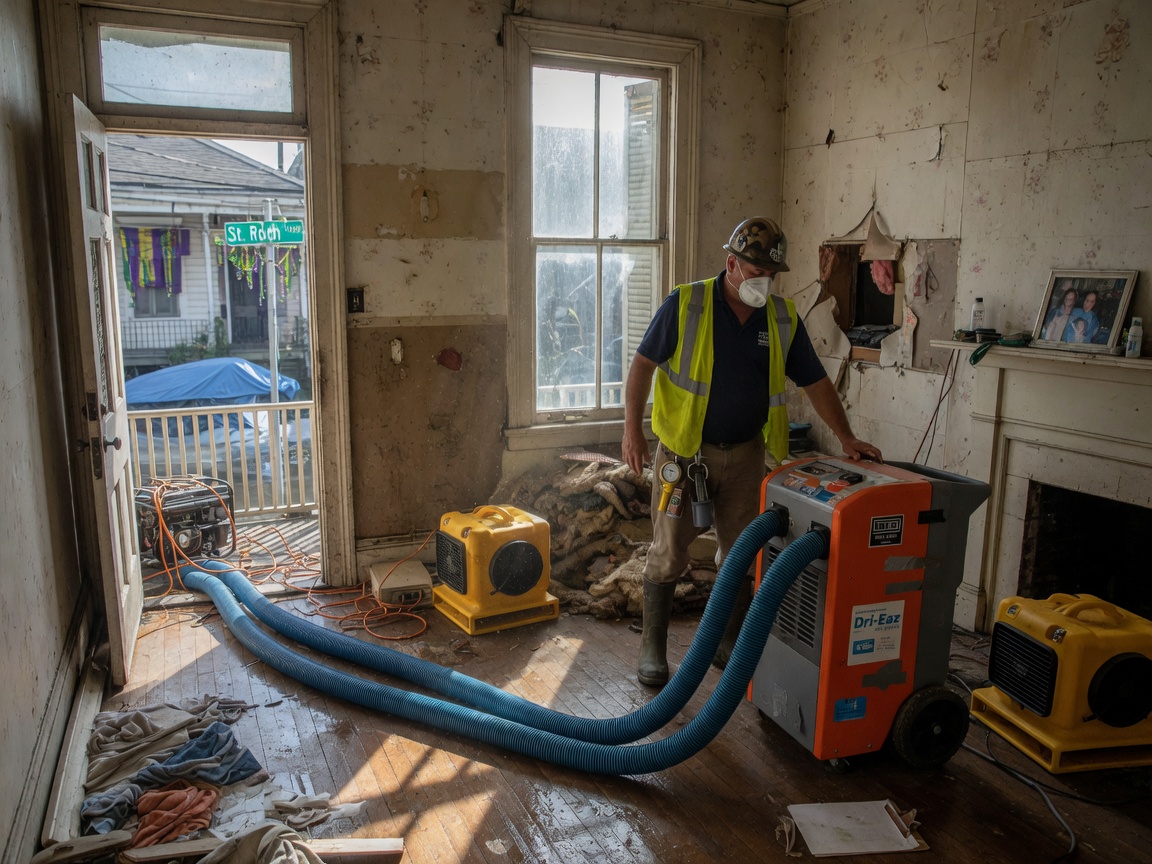
New Orleans humidity stays above 70 percent for weeks at a time, so structural drying after a roof leak or flood line requires more than fans. In Garden District and Uptown homes with 100-year-old plaster over lath, water travels behind the surface and stays in the cavities until we pull it with negative-pressure drying and low-grain dehumidifiers. Brick foundations in the French Quarter and Treme hold moisture longer than modern slab homes because the lime mortar wicks water upward, forcing us to monitor readings at multiple heights for days rather than hours.
Hurricane season brings rapid saturation followed by weeks of high dew points, so we stage equipment differently in Mid-City and Lakeview than in drier inland parishes. Wood joists under raised Bywater and Marigny cottages swell and cup when left wet past 18 percent moisture content, and we have to open baseboards and drill weep holes to reach the subfloor without cutting historic heart-pine floors. Algiers and Gentilly properties built on fill dirt often show hidden moisture under vinyl and tile because the slab sits below the water table after heavy rain.
Structural Drying Near You — Choose Your City
Every city below has its own local Structural Drying page with coverage details.
We log daily moisture readings with pin and pinless meters and adjust airflow until every affected assembly returns to the 8-12 percent range typical for Orleans Parish. Skipping this step before sheetrock replacement or refinishing almost always leads to cupping floors or mold growth once the next humid front arrives from the Gulf.
When a line break or storm surge hits a single-story home in Lakeview, we first isolate the wet zone with plastic barriers to keep the rest of the house from picking up extra humidity. Then we place commercial dehumidifiers sized for the square footage and run them 24 hours until equilibrium readings stabilize across walls and subfloor.
Technician insight
In New Orleans the thing that catches most people out with structural drying is how fast humidity re-soaks old plaster once the machines stop. French Quarter and Treme homes with lime mortar will pull moisture back out of the ground or from the next rain if we do not keep running low-grain units until the walls test below 12 percent across the full height.
Garden District plaster wall after roof leak
A homeowner in the Garden District called after a slow roof leak left two upstairs bedrooms damp. We found moisture readings above 25 percent behind the original plaster. We placed contained drying equipment for five days, pulling readings daily until the lath and plaster stabilized at 10 percent. The floors and trim stayed intact and the rooms were ready for paint without mold returning.
Structural Drying Services We Offer
✓Wall Cavity Drying
We drill small access points and use negative air to pull moisture from plaster and lath cavities common in French Quarter and Garden District homes.
✓Subfloor Moisture Extraction
Raised cottages in Bywater and Marigny often trap water under heart-pine floors; we pull baseboards and apply directed airflow to dry joists without full demolition.
✓Post-Flood Structural Drying
After hurricane surge in Gentilly or Lakeview we stage large dehumidifiers and air movers to handle slab and foundation moisture before mold sets in.
✓Historic Plaster Drying
Treme and Marigny properties with lime plaster require slower, lower-temperature drying to avoid cracking the original finish during moisture removal.
✓Moisture Mapping and Monitoring
Daily meter readings track hidden water behind brick and wood in Uptown and Mid-City homes until levels match the surrounding dry structure.
Structural Drying Cost in Louisiana
| Service | Typical Range | What Affects It |
|---|---|---|
| Single-room wall and floor drying | $650–$1,200 | Varies with plaster versus drywall and access to cavities |
| Whole-house drying after minor leak | $1,800–$3,500 | Larger in raised historic homes with multiple floor levels |
| Post-storm structural drying | $2,800–$6,000 | Driven by water volume and number of days equipment must run |
Ranges are typical for Louisiana and confirmed with an exact written quote before any work starts.
How it works
- 1
Initial Assessment
We walk the property in the affected neighborhood and use moisture meters to map saturation in walls, floors, and framing.
- 2
Water Extraction
Standing water is removed first so drying equipment can focus on trapped moisture rather than surface puddles.
- 3
Equipment Placement
Dehumidifiers and air movers are positioned for the home's layout, with barriers to contain humidity in older Orleans Parish houses.
- 4
Daily Monitoring
Readings are taken each day until moisture content returns to normal levels for the local climate and materials.
- 5
Final Verification
We confirm all assemblies are dry before equipment removal and hand the homeowner documented readings.
Pricing
Pricing depends on square footage affected, number of rooms, and how long drying takes in our humid climate.