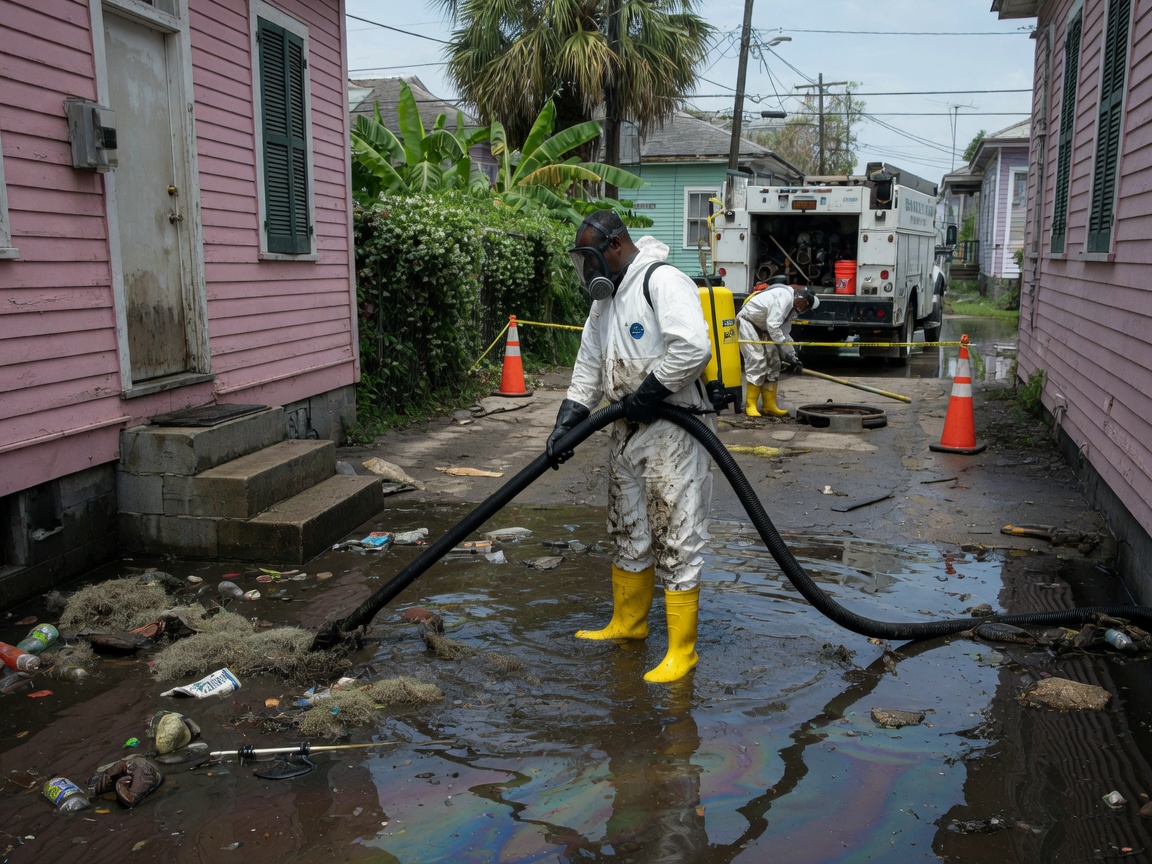
Sewage backups in New Orleans often stem from aging clay pipes in Treme and Marigny homes combined with heavy rains that overwhelm the parish drainage system. Technicians must first classify the water as category three black water, then establish containment to prevent cross-contamination into living spaces. In humid subtropical conditions, bacteria and mold colonies double every few hours once temperatures climb, so extraction and antimicrobial application must begin before the next storm cell moves in from the Gulf.
Lakeview and Gentilly properties sit on a high water table where groundwater seeps through slab cracks during hurricanes, carrying street sewage under flooring. Crews lift hardwood or cut carpet in sections rather than pulling entire rooms to limit structural disturbance in older raised-floor homes. After removal, negative-air machines and dehumidifiers run continuously because residual moisture trapped in plaster walls of Uptown and Mid-City houses quickly fuels hidden growth.
Sewage Cleanup Near You — Choose Your City
Every city below has its own local Sewage Cleanup page with coverage details.
Algiers and Bywater jobs frequently involve crawl-space contamination where floodwater mixes with septic lines. Technicians fog with EPA-registered disinfectants rated for porous materials, then install vapor barriers once moisture readings drop below 15 percent. Homeowners in the Garden District sometimes discover sewage has migrated through shared alley drains, requiring coordination with adjacent properties before final clearance testing.
Technician insight
In New Orleans the thing that catches most people out with Sewage Cleanup is how quickly street water backs up through the old combined sewer lines in Gentilly and Lakeview once the pumps at the parish stations lose power during a storm. Homeowners often try to clean visible water themselves, but the sewage has already wicked into the plaster lathe of 1920s homes, and that hidden moisture triggers mold within 48 hours in our humidity.
Garden District Backup After Heavy Rain
Sewage entered a raised-floor home through a cast-iron pipe failure during a summer downpour. Water had traveled under the dining room and into the wall cavities. Crews isolated the affected joists, extracted the black water, removed saturated insulation, and ran drying equipment for four days until readings stabilized. The homeowner returned to a fully sanitized space without structural compromise.
Sewage Cleanup Services We Offer
✓Black Water Extraction
Removes standing sewage from slabs, carpets and subfloors in French Quarter and Marigny properties before bacteria spread.
✓Biohazard Containment
Sets up sealed barriers and negative pressure to isolate affected zones in multi-story Uptown and Garden District homes.
✓Sanitization and Disinfection
Applies hospital-grade antimicrobials to all contacted surfaces after sewage intrusion in Lakeview and Gentilly slabs.
✓Porous Material Removal
Safely discards saturated drywall, insulation and carpet padding that cannot be restored after category-three water events.
✓Crawl Space Sewage Cleanup
Extracts contaminated water and treats soil under Algiers and Bywater homes where floodwater meets older plumbing.
✓Post-Sewage Drying
Uses commercial air movers and dehumidifiers to return moisture levels to safe ranges inside historic Mid-City and Treme structures.
Sewage Cleanup Cost in Louisiana
| Service | Typical Range | What Affects It |
|---|---|---|
| Initial Assessment | Free | Includes moisture mapping in affected rooms |
| Small Room Sewage Cleanup | $650–$1,200 | Bathroom or kitchen backup under 200 sq ft |
| Full Floor Extraction | $1,800–$3,500 | Multiple rooms plus subfloor drying |
| Crawl Space Treatment | $1,400–$2,800 | Pumping, soil treatment and vapor barrier |
| Disposal And Sanitization Add-On | $350–$650 | Biohazard waste removal and antimicrobial fogging |
Ranges are typical for Louisiana and confirmed with an exact written quote before any work starts.
How it works
- 1
Site Assessment
Technician inspects for sewage migration paths through slab cracks or shared drains common in Orleans Parish neighborhoods.
- 2
Containment Setup
Plastic barriers and air scrubbers isolate the work zone to protect unaffected areas of the home.
- 3
Extraction And Removal
Standing water and saturated materials are removed using pumps and HEPA vacuums rated for biohazards.
- 4
Disinfection And Drying
Antimicrobial treatment followed by continuous drying until moisture meters confirm safe levels.
- 5
Final Clearance
Air quality and surface testing verify the space meets health standards before re-entry.
Pricing
Costs depend on square footage affected, depth of penetration into older slab or crawl-space construction, and whether hurricane-related street flooding is involved.