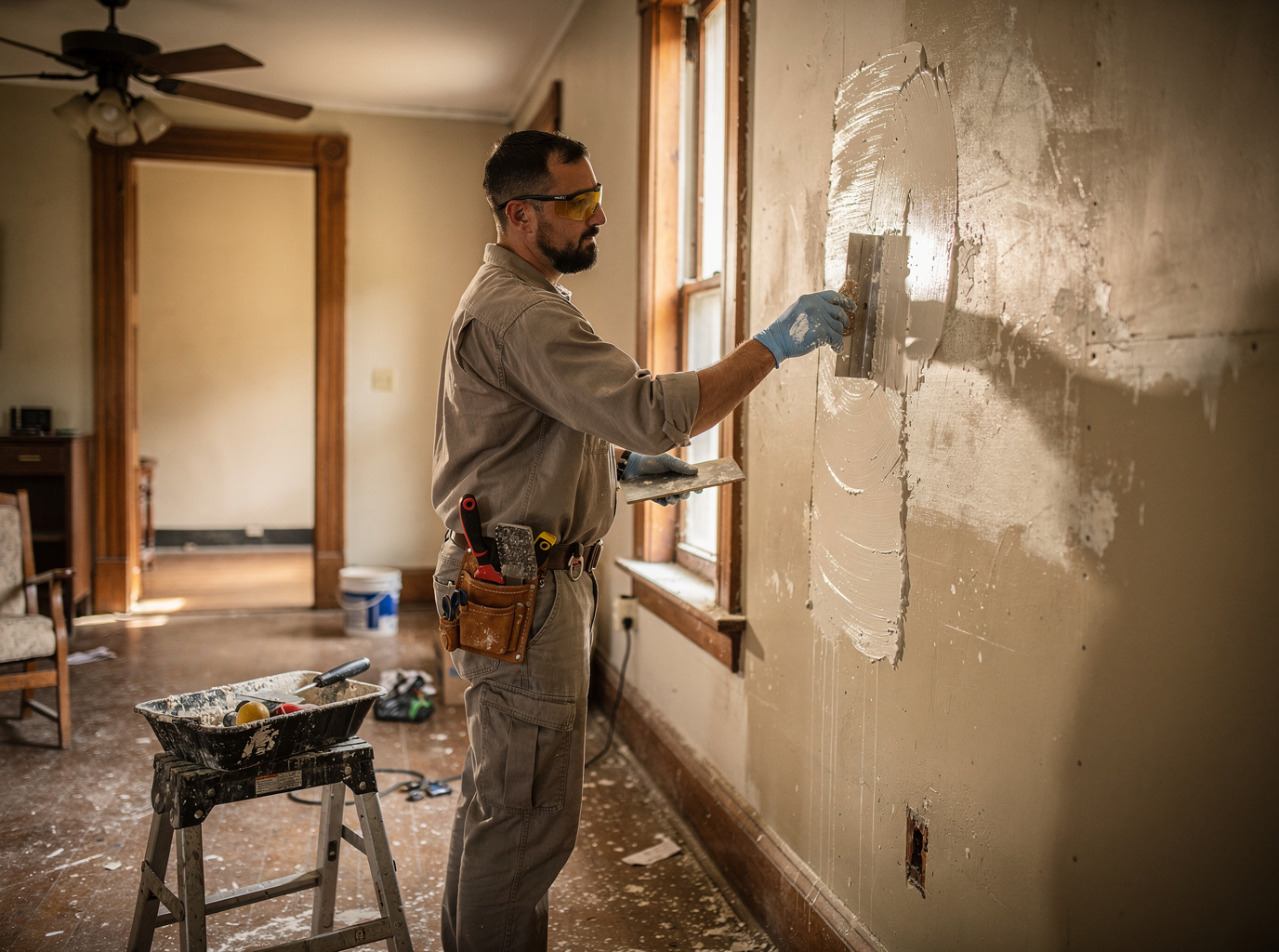
New Orleans humidity keeps moisture trapped in drywall long after the visible water recedes, especially in raised-floor homes in Mid-City and Lakeview where floodwater reaches the lower wall sections. We remove affected gypsum, check for hidden saturation behind baseboards, and use dehumidification sized for the local climate before installing new panels. In French Quarter and Garden District properties built before 1920, many walls are still original lath and plaster; we cut back only to sound material and feather new drywall into the existing finish so the repair does not telegraph through later paint coats.
Hurricane season brings repeated wetting cycles that break down paper facing and encourage mold on the back side of drywall. We map moisture with meters at multiple heights because water wicks upward differently in the soft soils of Gentilly and Algiers. Replacement panels are taped with setting-type compound formulated for high humidity so joints do not crack during the next rain event. All work is scheduled around the business hours of Monday through Friday 8am–6pm and Saturday 9am–2pm so homeowners can remain on site.
Drywall Repair Near You — Choose Your City
Every city below has its own local Drywall Repair page with coverage details.
Ceiling repairs after roof leaks or upstairs overflows require temporary containment to keep dust out of living spaces below, particularly in the dense row houses of Marigny and Bywater. We match the existing texture—whether skip-trowel or popcorn—using the same aggregate size found in Uptown homes. Electrical outlets and switches are protected or relocated only when necessary, and we coordinate with licensed electricians when wiring has been affected by the same water event.
Technician insight
In New Orleans the thing that catches most people out with drywall repair is how long the high humidity keeps the back side of the board wet even after the front looks dry; we have pulled panels in Lakeview homes three weeks after a storm that still showed elevated readings because the soft soil kept the slab edge damp.
Hidden moisture behind baseboards after heavy rain
A Mid-City homeowner called after water entered through a window during a summer storm. We found the lower eighteen inches of drywall still holding moisture weeks later because the raised floor trapped humidity against the slab edge. After removing the affected sections and running dehumidifiers for forty-eight hours, we replaced the board with MR panels and matched the existing baseboard profile so the repair disappeared once painted.
Drywall Repair Services We Offer
✓Water-Damaged Drywall Removal
Cut out saturated sections to sound material, bag debris on site, and protect adjacent finishes in older Orleans Parish homes.
✓Moisture Mapping and Testing
Use pin and pinless meters to locate hidden water behind walls and ceilings before any cutting begins.
✓Mold-Resistant Drywall Replacement
Install MR or fiberglass-faced panels in high-humidity zones such as Lakeview and Gentilly after flood events.
✓Historic Wall and Ceiling Repair
Blend new drywall into lath-and-plaster finishes common in the French Quarter and Garden District without altering original profiles.
✓Ceiling Drywall Repair After Leaks
Replace sagging or stained ceiling sections and match existing textures in Uptown and Mid-City residences.
Drywall Repair Cost in Louisiana
| Service | Typical Range | What Affects It |
|---|---|---|
| Small wall patch under 4 sq ft | $175–$350 | Single-layer repair; price rises with plaster transitions or second-story access. |
| Full wall section replacement | $450–$950 | Includes removal, new board, tape, and texture; higher in historic districts with multiple finish layers. |
| Ceiling panel replacement | $300–$700 | Depends on height, texture match, and whether electrical fixtures must be dropped. |
| Moisture mapping add-on | $125–$225 | Required when water source is unknown or multiple rooms are affected. |
Ranges are typical for Louisiana and confirmed with an exact written quote before any work starts.
How it works
- 1
On-Site Assessment
Measure affected areas, check moisture levels at multiple heights, and note any plaster or historic finishes in neighborhoods like Treme or Marigny.
- 2
Controlled Demolition
Remove only saturated drywall, contain dust, and protect floors and cabinetry before disposal.
- 3
Drying and Verification
Run commercial dehumidifiers sized for New Orleans humidity until readings reach acceptable levels, then retest.
- 4
New Panel Installation and Finish
Hang, tape, and texture replacement sections to match surrounding walls, then apply primer.
Pricing
Pricing based on square footage inspected and extent of hidden damage; written quotes provided after assessment.