2026-08-21 · Remy LeBlanc
Water Damage Repair After New Orleans Summer Flooding
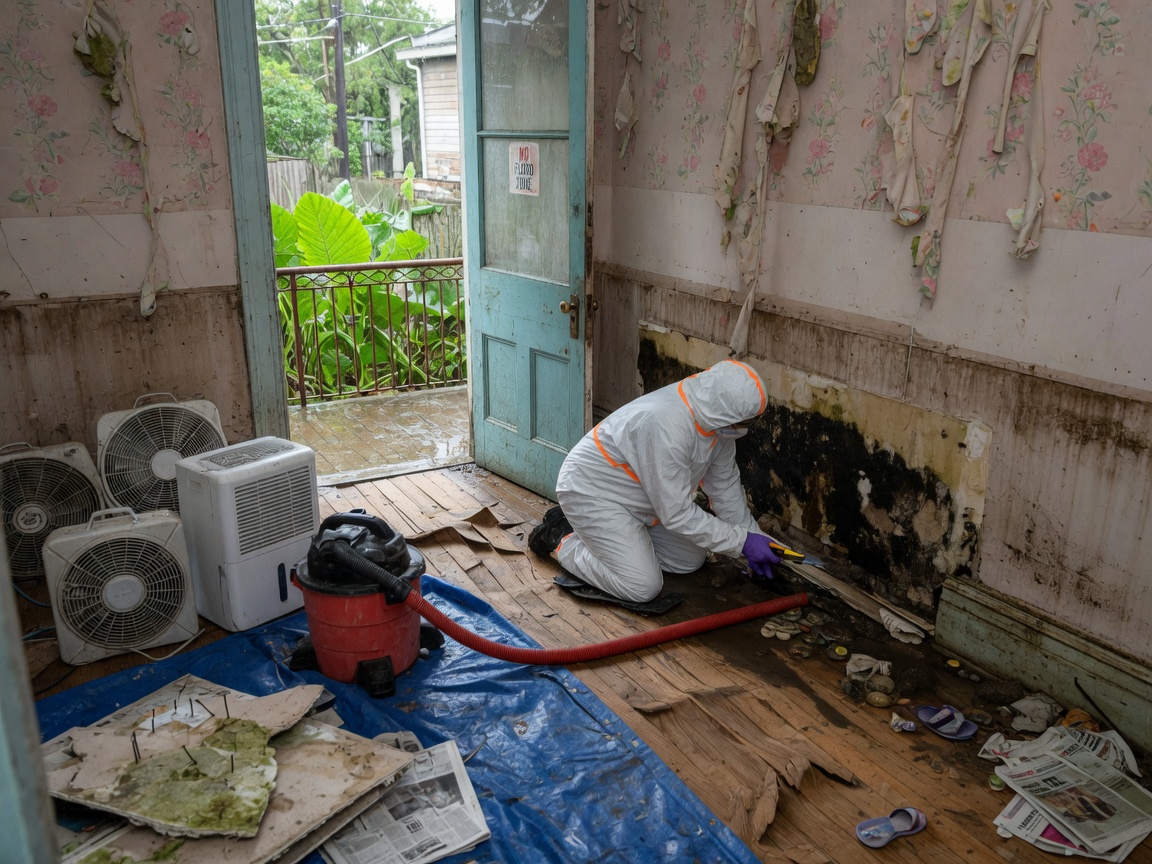
After summer flooding hits New Orleans, water damage repair starts with rapid water extraction followed by targeted drying to limit structural harm in Orleans Parish homes. Summer humidity accelerates saturation in older housing stock found in the French Quarter, Garden District, and Marigny, where raised foundations and pier-and-beam construction still allow water to reach subfloors and walls. Immediate action prevents long-term issues that arise when moisture lingers in the humid subtropical climate.
Initial Assessment of Flood-Affected Properties
Summer flooding in New Orleans often reaches 6–18 inches inside homes in low-lying spots like Mid-City, Lakeview, and Gentilly. A thorough assessment identifies water depth, duration of exposure, and affected materials before any repair begins. Crews check for hidden moisture behind drywall in Uptown bungalows and shotgun houses common throughout the city. They also evaluate soil saturation around slabs in Algiers and Treme, where clay-heavy ground holds water longer after heavy rains. This step reveals whether contents in the first 2 feet of walls require removal or if drying can salvage them. Assessment also notes any sewage intrusion common when storm drains back up near the Mississippi River. Accurate findings guide every following decision and help homeowners understand the scope in concrete terms rather than estimates.
Water Extraction Priorities in Humid Conditions
High summer temperatures combined with frequent afternoon storms mean standing water must be removed within hours to avoid rapid microbial growth. Technicians use truck-mounted pumps and portable extractors to pull water from carpets, hardwood floors, and tile in Bywater and Marigny properties. In older French Quarter buildings, extraction focuses on crawl spaces where moisture pools against brick piers. Water extraction prevents water from migrating into wall cavities of multi-story homes near Jackson Square. After pumps finish, crews place air movers and dehumidifiers rated for 70–80 pint daily removal to match the area's high moisture load. This phase typically takes 1–3 days depending on square footage and how deeply water penetrated slab foundations common in Lakeview.
Structural Drying for Local Housing Stock
Once bulk water is gone, structural drying targets the unique materials in New Orleans homes. Pier-and-beam floors in the Garden District require under-floor drying systems because standard fans cannot reach the space. In Mid-City and Gentilly, plaster walls absorb water differently than modern drywall, so crews monitor moisture meters daily for 4–7 days. Structural drying equipment runs continuously during peak humidity periods when outdoor levels stay above 70 percent. Technicians adjust placement around St. Louis Cathedral-area properties where narrow lots limit airflow. Drying also addresses insulation in attics of Uptown homes that trap moisture after roof leaks during hurricanes. Consistent monitoring ensures wood framing returns to 12–14 percent moisture content before any repairs begin.
Addressing Secondary Mold Risks
New Orleans humidity turns any remaining moisture into mold within 48–72 hours after flooding. Properties in the Bywater and Treme often see growth behind baseboards and in HVAC systems after summer storms. Early drying stops spores from spreading into adjacent rooms of shotgun houses. When mold appears, crews isolate affected zones and use HEPA filtration during cleanup. Homeowners in Algiers and Harvey notice faster growth on organic materials like original heart-pine floors. Regular checks in City Park-adjacent neighborhoods help catch issues before they reach drywall repair stages. Proper drying also protects nearby cities like Metairie and Slidell where similar flooding patterns occur.
Practical Next Steps for Homeowners
After drying completes, focus shifts to restoring affected surfaces. Owners in the French Quarter should review the article Drying Historic Homes After Water Intrusion In The French Quarter for material-specific guidance. Costs near the Mississippi River vary based on access and material age, as explained in What Influences Water Damage Repair Costs Near The Mississippi River. Schedule inspections early in the week when crews are most available. The team operates Mon–Fri 8am–6pm and Sat 9am–2pm to handle follow-up visits. Document all steps with photos for insurance claims common after Orleans Parish flooding events.